

Right VS Wrong Treatments for Sciatica! A 3-Step Guide That Relieves Sciatica FAST!
Updated: Jan 1
Are you still searching for that “magic solution” for sciatica? You’ve tried ice, heat, cupping, massage, acupuncture, even injections, yet your low back and leg pain keep coming back.
That’s not because you’re broken. It’s because you’re missing one crucial piece that actually allows sciatica to heal.
The Common Mistake Almost Everyone With Sciatica Makes
Most people with sciatica rely on things like:

E-stim
Ice packs
Massage
Dry needling
Steroid injections
At first, these can feel good.
But here’s the problem.
What Do All These Treatments Have in Common?
They are PASSIVE therapies.
That means:
You’re lying down
Something is being done to you
Your body isn’t actively involved
Passive treatments may temporarily calm symptoms, but they don’t change the reason sciatica exists.
Sciatica Is an ACTIVE Problem
Sciatica almost always changes based on posture and movement.

People commonly notice:
Pain increases the longer they sit
Pain worsens when bending forward to put on socks or shoes
Stretching the leg feels like pulling on a tight rubber band
That tells us something important.
If Your Pain Changes With Movement, It Needs an Active Solution
Sciatica is not random.
In most cases, it’s caused by a disc bulge or disc herniation irritating a nerve. If movement affects your pain, passive treatments alone will never fully fix it.
Active problem → Active solution
What ACTUALLY Helps Sciatica Improve
You need the right movements, done the right way, for your specific presentation.
Below are three simple exercises that can help many people start reducing sciatica symptoms.
These are a starting point, not a replacement for assessment.
Exercise 1: Lumbar Extensions

Why This Works:
Most people sit all day. Prolonged sitting creates flexion intolerance, pushing disc pressure backward toward sensitive nerves.
When a person experiences increased pain or discomfort while bending forward, especially through the lower back, it is known as flexion intolerance. Symptoms often worsen during activities such as prolonged sitting, forward bending, or lifting in a bent posture. This condition is commonly linked to disc problems, poor posture, or weak core muscles, and it is best managed by maintaining a neutral spine and limiting repeated flexion movements.
Lumbar extensions:
Reverse sitting stress
Restore spinal motion
Reduce nerve irritation
Help move disc pressure away from the nerve
Start gently and progress as tolerated.
Exercise 2: Pelvic Tilts (Lower Back Control)
Instead of moving the entire spine like a cat-cow, focus on isolating the lower back.

Why This Matters:
Restores motion in both directions
Improves lower-back control
Increases body awareness
Reduces pain sensitivity
Better control = less pain.
Exercise 3: Wide-Knee Pelvic Tilts (Upgrade)
Spread your knees wide and repeat the same pelvic tilt movement.
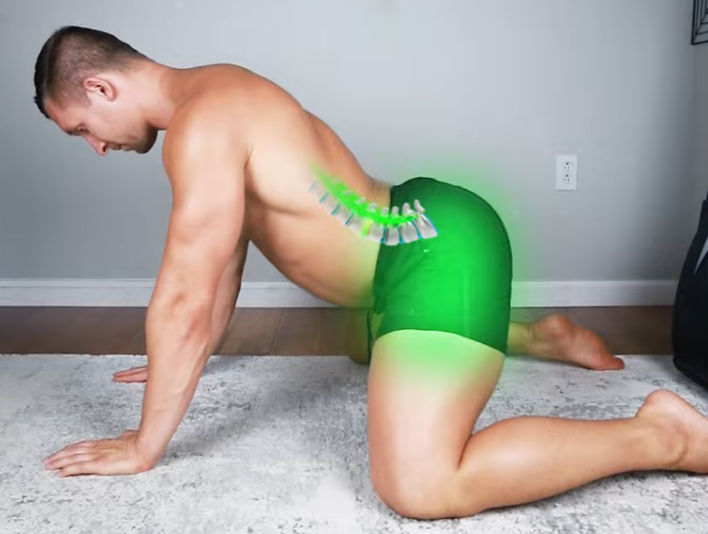
Why This Is Even Better
This variation:
Requires more control
Mobilizes the hips
Reduces stress on the lower back
Takes pressure off the sciatic nerve
Stiff hips force the lower back to compensate
This Works Better Than Lying on a Table
These movements:
Address the root problem
Retrain the nervous system
Restore motion and control
That’s why they work better than passive treatments alone.
But This Still Might Not Be Enough
Not everyone needs the same plan.
Sciatica recovery depends on:
Your specific disc mechanics
How your symptoms respond to movement
Whether your pain centralizes or worsens
Guessing isn’t enough.
“I’m Tired of Temporary Relief.”
If you want lasting results, you need a structured, personalized plan, not random exercises.
What’s the Next Step?
The fastest way to know what your sciatica needs is proper assessment.
The centralization process helps determine:
Which movements help
Which movements hurt
What needs to be addressed first
This approach has helped thousands recover and avoid injections or surgery.
✅ What they were missing is the Centralization Process which helps us immediately determine the right exercises for your situation!
✅ See on average a 37% reduction in symptoms in the very first session to avoid surgery!
✅ Get a free demo with us following the link below!
Thanks for reading! -Dr. Grant Elliott


Comments