

Can Foam Rolling Make Sciatica Worse? What to Do Instead for Faster Relief
Sciatica can be frustrating, painful, and confusing, especially when the very thing you were told would help, like foam rolling, actually makes your symptoms worse instead of helping you treat sciatica effectively or understand what helps sciatic nerve pain.
If rolling your glutes or hamstrings muscle causes sharper pain, burning, or shooting sensations down your leg, you’re not imagining it. And you might be wondering, does foam rolling help sciatica?
In fact, foam rolling can worsen sciatica, and most people don’t realize why.
In this guide, you’ll learn:
Why foam rolling often aggravates sciatica
The two biggest mistakes people make without realizing it
What is sciatica leg pain actually is (and what it’s not)
Three simple, effective sciatica exercises that reduce sciatica faster without a foam roller
What Is Sciatica? (Explained Simply)
Sciatica refers to pain that occurs when the sciatic nerve becomes irritated, inflamed, or compressed. This discomfort typically begins in the lower back or buttocks and travels down through the hip and leg. Along with pain, people may experience sensations such as burning, tingling, weakness, or numbness that follow the nerve’s pathway.
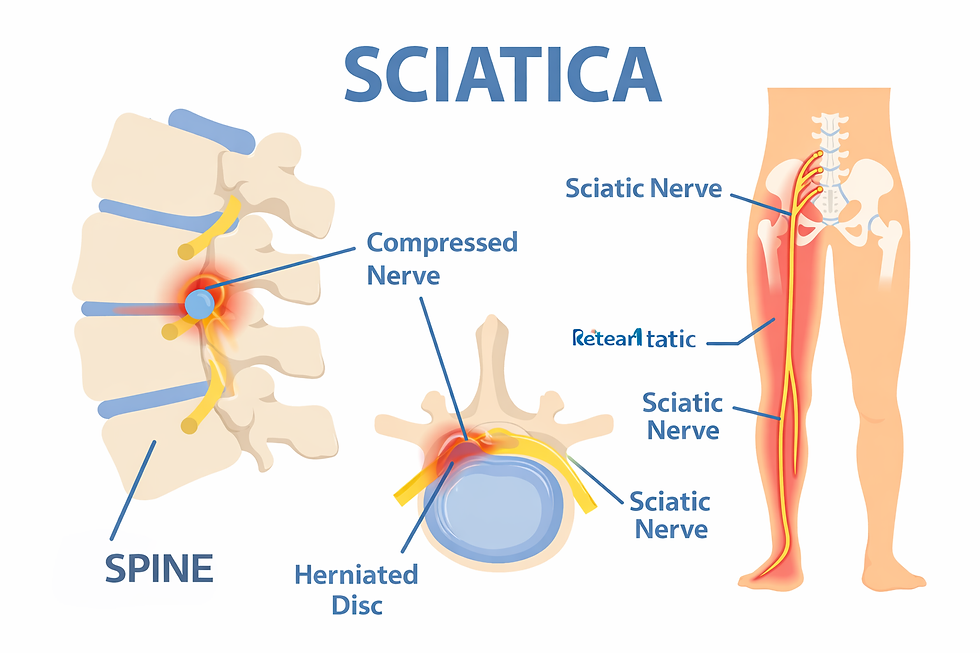
The sciatic nerve is the largest nerve in the human body. It forms from several nerve roots in the lower spine and extends through the pelvis, buttocks, and down each leg. Rather than being a single nerve strand, it is a network of nerves that work together to control movement and sensation in the lower limbs.
Common sciatica symptoms include:
Sharp or electric-like pain
Burning sensations
Tight pulling down the leg
Dull, aching discomfort
If your leg pain increases when bending forward, touching your toes, putting on socks or shoes, or stretching your hamstrings, there’s a strong chance you’re dealing with nerve-related pain, not a tight muscle.
Most cases of sciatica are caused by:
An irritated or compressed nerve root
Why Foam Rolling Makes Sciatica Worse
Foam rolling is often marketed as a cure-all, but when it comes to sciatica, it can backfire badly. There are two major reasons for this.

Mistake #1: Foam Rolling Compresses the Sciatic Nerve
If a disc is already irritating a nerve, that nerve is sensitive and inflamed. Nerves hate compression.
When you sit or roll directly on:
The glutes
The piriformis
The hamstrings
You’re often pressing directly onto the sciatic nerve as it passes through these tissues. Instead of relieving pain, you’re adding more pressure to an already irritated nerve, making symptoms worse.
Mistake #2: Foam Rolling Increases Nerve Tension
Nerves also dislike being aggressively stretched.

Many people foam roll while:
Straightening the leg
Forcing hamstring stretches
Leaning forward aggressively
This creates tension along the nerve, pulling it tighter through the spine and leg. A sensitive nerve doesn’t want to be stretched, it reacts by sending pain signals down the leg.
This is why foam rolling often provides short-term relief at best and worsening symptoms at worst.
The Smarter Approach: What to Do Instead
Instead of compressing or pulling on the nerve, the goal is to understand what exercise is good for sciatica and focus on movements that:
Reduce pressure on the nerve
Improve space around the nerve
Restore healthy movement and strength
Here are three proven exercises that do exactly that.
Exercise 1: Lumbar Extension to Reduce Disc Pressure
Purpose: Help reverse disc bulges so they stop irritating the nerve.
How to Do It:
Get on all fours
Gently push your hips forward and down
Allow your lower back to sink into extension
Only go to the point of mild discomfort—not pain
Repeat slowly and frequently, gradually increasing range as tolerated.
Why It Works:
Most disc-related sciatica worsens with forward bending. This movement does the opposite, helping shift pressure away from the nerve.
Key rule:
If leg symptoms decrease → you’re on the right track
If symptoms worsen → stop and adjust
Exercise 2: Side-Lying Nerve Decompression + Flossing
Purpose: Calm nerve irritation and restore blood flow.
How to Do It:
Lie on your side with the painful side facing up
Place a pillow under your lower back to create a gentle arch
This opens the nerve exit space in the spine
Now:
Slowly extend and bend the top leg
Keep the movement smooth and controlled
Why It Works:
This position increases space around the nerve while gently mobilizing it—helping flush inflammation and reduce sensitivity.
Exercise 3: Pigeon Drop for Hip Stability
Purpose: Strengthen and stabilize the glutes and piriformis without overstretching.
How to Do It:
Set up like a pigeon pose, but keep your body upright
Contract the glute on the target side
Slowly rock forward and back under control
Why It Works:
This exercise strengthens muscles while taking both the muscle and nerve through multiple safe ranges of motion, improving long-term hip and nerve resilience.
Why One Routine Isn’t Enough
These exercises can help reduce pain quickly, but sciatica is rarely solved with a single routine.
Long-term success requires:
Identifying the true root cause
Matching movements to your specific symptoms
Progressing into a bulletproofing phase so pain doesn’t return
This individualized approach is how our Centralization Process has helped thousands of people avoid injections, surgery, and years of frustration.
The Missing Piece Most People Never Address
Many people with sciatica have tried:
Chiropractic care
Physical therapy
Medications
Injections
Yet they’re still in pain because they never learned the centralization process, a method that quickly identifies which movements reduce nerve symptoms instead of aggravating them.
When done correctly, this approach often leads to:
Rapid symptom reduction
Clear direction for exercises
Long-term results instead of temporary relief
What is the Next Step?
This can vary from person to person but in my experience with online clients around the world there is a similar pattern among many individuals with disc herniations or sciatica that is commonly missed.
The majority of my clients in the RehabFix Online Low Back Program have had low back issues for years and have tried Chiro, PT, medication, injections, orthopedists - you name it! It seems like they all were missing some key components.....
✅ What they were missing is the Centralization Process which helps us immediately determine the right exercises for your situation!
✅ See on average a 37% reduction in symptoms in the very first session to avoid surgery!
✅ Get a free demo with us following the link below!
Thanks for reading! -Dr. Grant Elliott


Comments