

Why Spinal Decompression Might Be Making Your Sciatica Worse (And What to Do Instead)
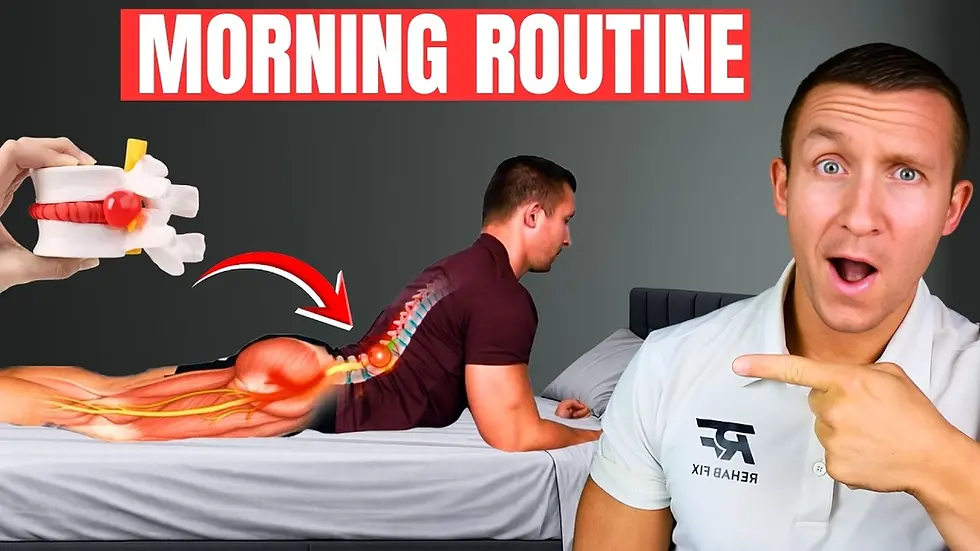
If you have been dealing with lower back pain, disc herniations, or radiating sciatica, you have likely looked into spinal decompression. In the orthopedic and fitness world, spinal decompression is frequently framed as the ultimate "holy grail" for disc issues.
The mechanism sounds logical: pull the lumbar spine apart, create negative pressure inside the joint, and allow the herniated disc material to suck back into place, taking pressure off the nerve root.
However, trying to decompress your lower back can actually backfire for many people, intensifying your symptoms rather than relieving them.
Why Spinal Decompression Can Backfire
While traction and decompression tables provide temporary relief for some individuals, they are far from a universal solution.
Here is why standard decompression can fail:
Negative Pressure Irritation:
If an unstable or highly inflamed disc cannot tolerate the mechanical pulling force, the negative pressure can further irritate the tissue and push the disc material further outward.
Heightened Inflammation:
Increased disc irritation triggers an inflammatory response, which in turn sensitizes the sciatic nerve and causes more shooting pain down your leg.
The "Repeat Cycle" Problem:
Many patients report feeling good immediately after a decompression session, only to wake up the next morning with the exact same pain.
Lack of Real-World Application:
You cannot live your life suspended upside down or hooked up to a machine. True, lasting recovery requires active mobility, core stability, and proper movement mechanics.

A Proven 3-Step Framework for Lasting Disc Relief
Instead of relying on passive, one-size-fits-all decompression methods, a structured three-step approach delivers faster, longer-lasting recovery:
Stabilize: Create security around the disc to allow overworked muscles and joints to relax.
Move: Apply targeted directional movement to actively reverse the disc bulge.
Support: Strengthen and stabilize the hips to permanently support the lower back and prevent future flare-ups.
3 Safe Exercises to Decompress and Protect Your Spine at Home
These three foundational movements target the root cause of disc and nerve irritation without aggressive pulling or twisting.
1. The Bear Plank (Spine & Core Stability)
How to perform:
Get on all fours with your hands directly under your shoulders and knees under your hips, feet shoulder-width apart. Lift your knees just a few inches off the ground while keeping your core braced and your spine completely straight.
Why it works: This position challenges the anterior core in a neutral alignment, acting like a security blanket around your lower back. It signals overworked spinal muscles and irritated discs to finally relax.
2. Supported Lumbar Extension (Reversing Disc Bulges)
How to perform:
Rest your upper body on a couch, chair, or bench with your knees positioned a few feet back. Keeping your lower back and glutes completely relaxed, gently push your hips forward and down toward the floor in controlled repetitions.
Why it works:
Over 90% of disc bulges are posterior (pushing backward) due to constant daily sitting, slouching, and forward bending. Moving the spine into controlled extension places an opposing force on the disc, encouraging it to center away from the sensitive nerve root.
3. The Pigeon Drop (Hip Stability & Nerve Mobility)
How to perform:
Position yourself on your elbows with your target leg set at a 45-degree angle at the hip. Brace your core, lift your hip slightly off the ground to contract your outer glutes and piriformis, and slowly lower it down in a rhythmic, controlled movement.
Why it works:
Weak hip stability forces the lower back to overwork. This movement strengthens external rotators, stabilizes the lumbar spine, and provides a gentle flossing effect to mobilize the sciatic nerve safely.
Why Random Herniated Disc Exercises Don't Work
One of the biggest mistakes people make is searching for random exercises online and hoping one of them finally works.
But successful rehabilitation depends on:
The right exercise selection
Correct timing
Your symptom response
Appropriate progression
Knowing what to address first
You don't need hundreds of exercises.
You need the right exercises for your situation.
What Is the Next Step?
This can vary from person to person, but in my experience working with clients worldwide, there is a consistent pattern among individuals dealing with herniated disc symptoms, sciatica, and chronic low back pain.
They’ve tried everything…
But they’re missing one key component:
✅ What they were missing is the Centralization Process which helps us immediately determine the right exercises for your situation!
✅ See on average a 37% reduction in symptoms in the very first session to avoid surgery!
✅ Get a free demo with us following the link below!
Thanks for reading! -Dr. Grant Elliott



Comments