

Reverse Hyperextensions for Low Back Pain: Miracle Exercise or Mistake?
If you've been searching for the best exercise for low back pain, herniated discs, or sciatica, chances are you've come across the reverse hyperextension.
Many fitness experts, powerlifters, and rehabilitation professionals praise the reverse hyperextension machine as one of the most effective tools for spinal health.
Some even claim that reverse hyperextensions can decompress the spine, reduce nerve pain, and accelerate recovery from disc injuries.
But here's the truth:
The reverse hyperextension exercise is not a miracle cure.
For some people, it can be extremely helpful.
For others, it may actually make their symptoms worse.
The key is understanding whether your spine responds well to the specific movements created by a reverse back hyperextension.
In this article, we'll break down:
What a reverse hyperextension is
Why it became so popular
Who can benefit from it
Who should avoid it
Why being Flexion-intolerant changes everything
What to do instead if reverse hypers aggravate your symptoms
What Is a Reverse Hyperextension?
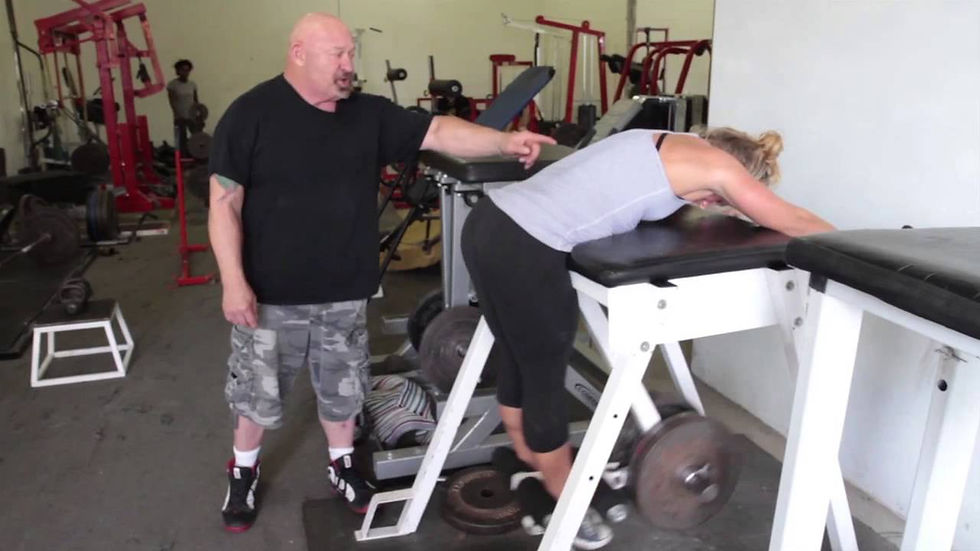
A reverse hyperextension is a posterior chain strengthening exercise typically performed on a specialized reverse hyperextension machine.
The movement involves:
Supporting your torso on a platform
Allowing your legs to hang beneath your body
Raising your legs behind you
Slowly controlling the descent

This back reverse hyperextension movement primarily targets:
Because these muscles play a critical role in spinal stability, the reverse hyperextension exercise has become a staple in many strength and rehabilitation programs.
The Story Behind the Louie Simmons Reverse Hyper
Much of the popularity surrounding the Louie Simmons reverse hyper comes from legendary powerlifting coach Louie Simmons.
As the founder of Westside Barbell, Simmons suffered significant spinal injuries throughout his career.
Searching for a way to continue training while managing his back issues, he developed the reverse hyper machine and began incorporating it into the famous Louie Simmons Westside Barbell training system.
Over time, the exercise gained a reputation for helping athletes:
Build posterior chain strength
Improve athletic performance
Recover from spinal injuries
Manage chronic low back pain
Today, the Louie Simmons reverse hyper is still one of the most recognized rehabilitation exercises in strength sports.
Why People Believe Reverse Hyperextensions Help Back Pain
The primary reason many therapists and coaches recommend reverse hyperextensions is that they combine two important concepts:
Spinal decompression
Posterior chain strengthening
During the lowering phase of the movement, the legs create a traction-like effect that may temporarily reduce compression through the lumbar spine.
During the lifting phase, the glutes, hamstrings, and spinal stabilizers contract to produce movement.
This combination creates a repeated cycle of:
Decompression
Contraction
Decompression
Contraction
For certain individuals, this can feel extremely beneficial.
When Reverse Hyperextensions May Help
The reality is that many people who improve with reverse hypers are simply becoming more active.
If someone has been sedentary for years and suddenly starts:
Walking
Strength training
Performing core exercises
Doing reverse hyperextensions
They will often feel better simply because they are moving more.
The body responds positively to progressive loading and exercise.
In these situations, the reverse hyperextension exercise may absolutely contribute to symptom improvement.
Additionally, some people naturally respond well to movements that place the spine into mild flexion and distraction.
These individuals often report relief from:
Flexion-distraction therapy
Certain decompression techniques
Reverse hyper machines
For them, reverse hypers can be a valuable tool.
The Problem: Not Every Spine Likes Reverse Hyperextensions
This is where things get interesting.
Many people are dealing with:
Herniated discs
Disc bulges
Sciatica
Nerve irritation
are actually Flexion-intolerant.
And this changes everything.
What Does Flexion-Intolerant Mean?
A Flexion-intolerant spine becomes irritated when bending forward.
Common aggravating activities include:
Sitting
Tying shoes
Picking objects off the floor
Bending forward repeatedly
Prolonged slouched positions
People who are Flexion-intolerant often notice that their symptoms worsen during these activities.
This is particularly common in individuals experiencing:
Disc bulges
Herniated lumbar discs
Sciatic nerve irritation
Radicular symptoms
Why Reverse Hyperextensions Can Aggravate Disc Injuries
During the lowering phase of a reverse hyperextension, the lumbar spine often moves into a flexed position.
For a healthy spine, this may not be a problem.
For a sensitive disc, however, repeated flexion can increase stress on the injured tissue.
This may:
Increase disc pressure
Aggravate nerve roots
Increase sciatic symptoms
Trigger muscle guarding
Create additional inflammation
As a result, some people leave the gym feeling worse after performing reverse hyperextensions, even though they were told the exercise would help.
This does not mean the exercise is bad.
It simply means it may not match your specific presentation.
Reverse Hyperextension and Sciatica
Many people searching for:
Reverse hyperextension for sciatica
Reverse hyperextension for herniated disc
Reverse hyper machine benefits
Best exercises for sciatic nerve pain
assume reverse hypers are universally safe.
Unfortunately, rehabilitation doesn't work that way.
If your symptoms worsen with:
Sitting
Bending forward
Hamstring stretching
Slouching
Repeated spinal flexion
there is a good chance you are Flexion-intolerant.
In these situations, a reverse back hyperextension may actually aggravate the very tissues you're trying to calm down.
Why One Exercise Can Never Fix Every Back Problem
One of the biggest mistakes people make is searching for the "best" exercise.
There isn't one.
Some individuals improve with:
Reverse hyperextensions
Lumbar extension exercises
Walking programs
Core stabilization
Nerve mobility drills
Others do not.
The success of any exercise depends on:
Your diagnosis
Your movement patterns
Your pain triggers
Your tissue sensitivity
Your spinal mechanics
This is why one person can swear by the reverse hyperextension machine while another person experiences a significant flare-up.
The Real Goal: Find What Your Spine Responds To
Instead of searching for a miracle exercise, focus on finding movements that:
Reduce symptoms
Improve function
Centralize pain
Increase confidence in movement
This is the foundation of successful rehabilitation.
Whether that movement ends up being:
A reverse hyperextension
A lumbar extension exercise
A stabilization drill
A walking program
depends entirely on your body.
The Missing Piece: The Centralization Process
At RehabFix, we focus heavily on identifying movement patterns that influence symptoms.
This is done through a process called:
👉 The Centralization Process
The goal is to determine:
Which movements reduce pain
Which movements increase pain
Whether symptoms are disc-related
Whether symptoms are nerve-related
What exercise progression is appropriate
Instead of guessing, we identify the exact movements your spine responds to best.
What Is the Next Step?
This can vary from person to person, but in my experience working with clients worldwide, there is a consistent pattern among those struggling with disc herniation, sciatica, and chronic low back pain.
They’ve tried everything: chiropractic, PT, medications, injections…
But they’re still missing the most important piece:
✅ What they were missing is the Centralization Process which helps us immediately determine the right exercises for your situation!
✅ See on average a 37% reduction in symptoms in the very first session to avoid surgery!
✅ Get a free demo with us following the link below!
Thanks for reading! -Dr. Grant Elliott


Comments