

Yoga for Sciatica: 6 Poses That Help Your Sciatica… and Which Ones Make It Worse
Does yoga for sciatica help relieve your lower back pain or sciatica?
The answer is yes… and no.
Some yoga poses for sciatica can provide incredible relief for an irritated sciatic nerve, while others can unknowingly increase pressure on your spine and make symptoms worse.
If you’ve been trying yoga to fix your back or leg pain but still wondering, is yoga good for sciatica, and haven’t seen results yet, you may simply be choosing the wrong poses for your specific condition.
Sciatica is most commonly caused by irritation of the sciatic nerve, often from disc bulges or disc herniations in the lower spine, and certain movements can either calm that irritation or aggravate it.
Understanding which yoga poses help and which ones to avoid can make a huge difference in your recovery.
6 Yoga Poses for Sciatica: Which Help and Which Hurt
Below are six common yoga poses explained, including which ones may relieve sciatica and which may worsen it.
Pose 1: Forward Fold (Often Problematic for Sciatica)
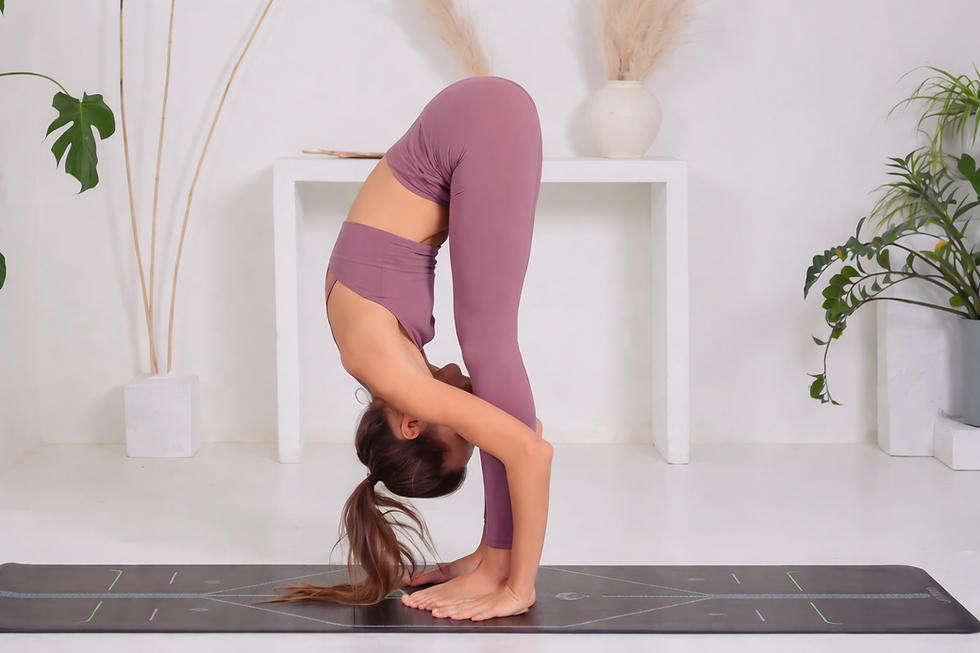
The classic forward fold is one of the most common yoga stretches.
Many people naturally gravitate toward it because it creates a deep stretch in the hamstrings and lower back.
However, this pose places the spine in lumbar flexion, which means bending forward.
For individuals with disc-related sciatica, this motion can increase pressure on the spinal discs. If a disc bulge or herniation is already irritating a nerve root, repeated forward bending may increase that pressure and worsen nerve irritation.
Many people with sciatica notice that their symptoms worsen when:
• Sitting for long periods
• Bending forward
• Putting on socks or shoes
If this sounds familiar, the forward fold may be a movement to temporarily avoid until your symptoms improve.
Pose 2: Warrior I (Helpful for Many People With Sciatica)
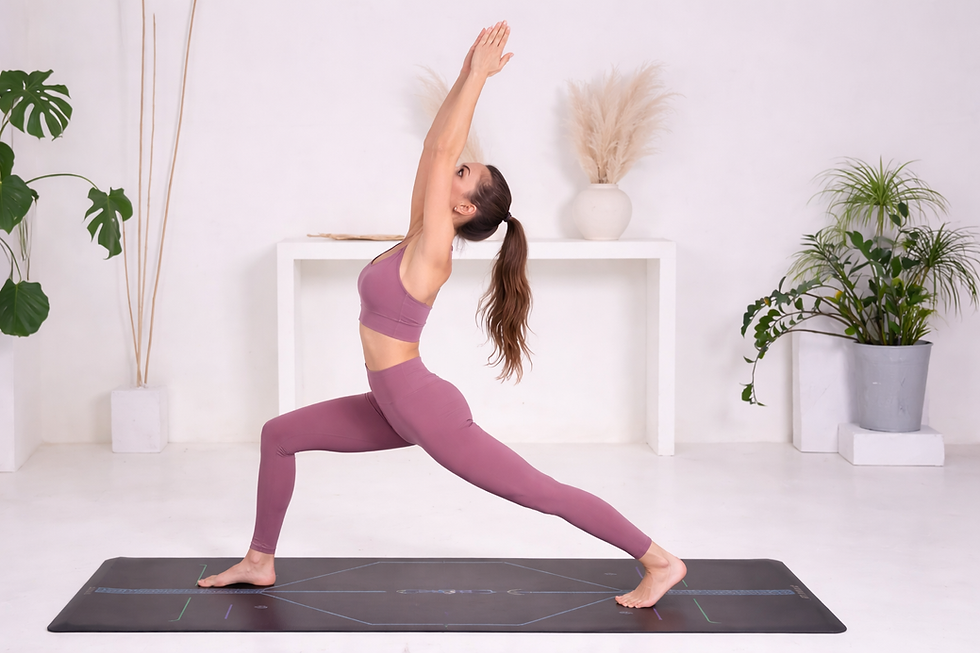
The Warrior I pose can be very beneficial for people dealing with back pain or sciatica.
In this position, your body is placed in a split stance with the arms overhead and the torso slightly extended backward.
If the leg with sciatica is positioned behind you, the pose naturally creates hip extension and gentle spinal extension.
Why does this matter?
Many individuals with low back pain have limited hip extension, meaning their hips struggle to move fully backward.
When the hips don’t move well, the lower back often compensates.
Warrior I helps:
• Improve hip extension
• Encourage gentle spinal extension
• Reduce stress on the lower back
For many individuals with disc-related sciatica, this pose can feel surprisingly relieving.
Pose 3: Bow Pose (Too Much Extension for a Sensitive Back)
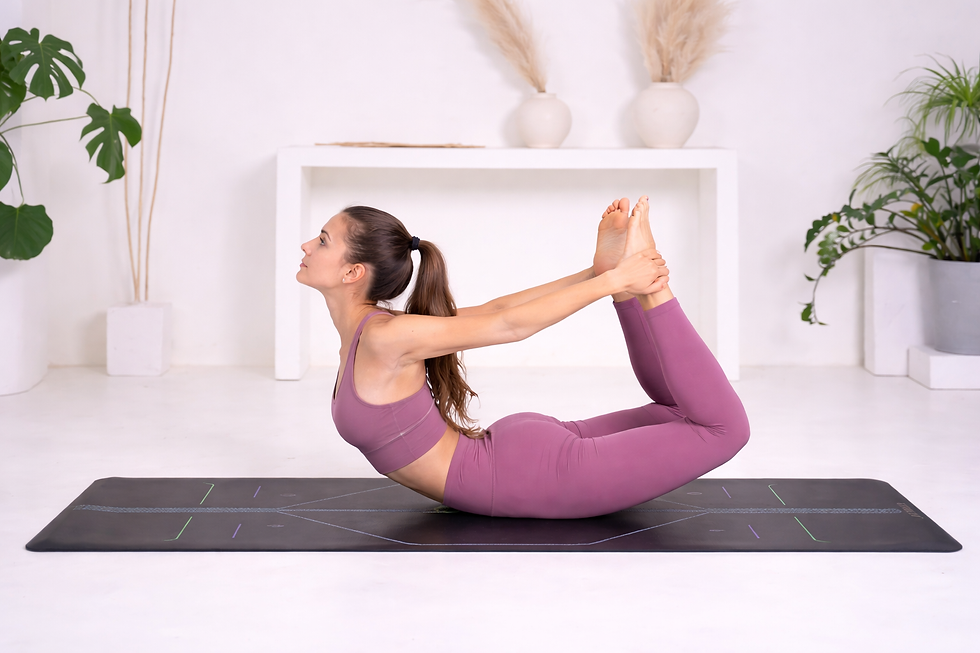
At first glance, the Bow Pose might look like a powerful stretch for the spine.
In this pose, you lie on your stomach, bend your knees, grab your ankles, and lift your chest and legs upward to create a deep arch.
However, this pose creates strong active spinal extension, which can sometimes overload a sensitive lower back.
When the spine is already irritated, too much aggressive extension may create compression in the lumbar joints and surrounding tissues.
Think of it like overeating spicy food it might feel good at first, but the aftermath can be painful.
For individuals with sensitive discs or active back pain, the Bow Pose can sometimes trigger a flare-up.
Pose 4: Cat-Cow (A Safe Mobility Exercise)
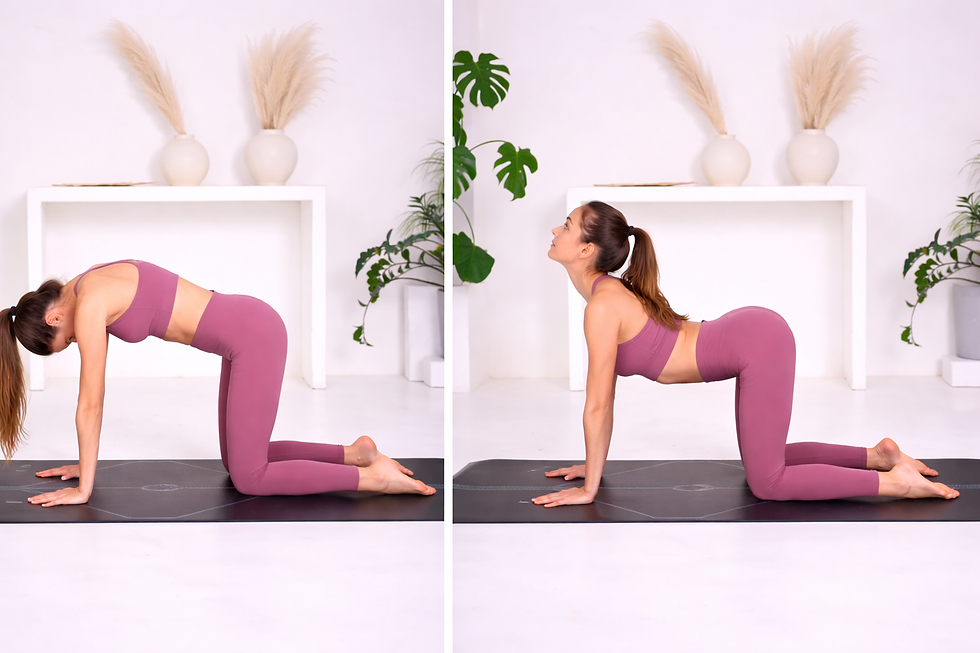
The Cat-Cow pose is one of the safest and most effective yoga movements for improving spinal mobility.
This movement gently alternates between spinal flexion and extension while the body is supported on the hands and knees.
One major advantage of this position is that gravity is not heavily compressing the spine, allowing the back to move more comfortably.
Cat-Cow helps:
• Improve spinal mobility
• Reduce stiffness in the back
• Restore controlled movement
However, individuals with disc-related sciatica should avoid excessive flexion in the Cat position.
Move within a comfortable range and avoid pushing into pain.
Pose 5: Triangle Pose (Can Increase Nerve Tension)
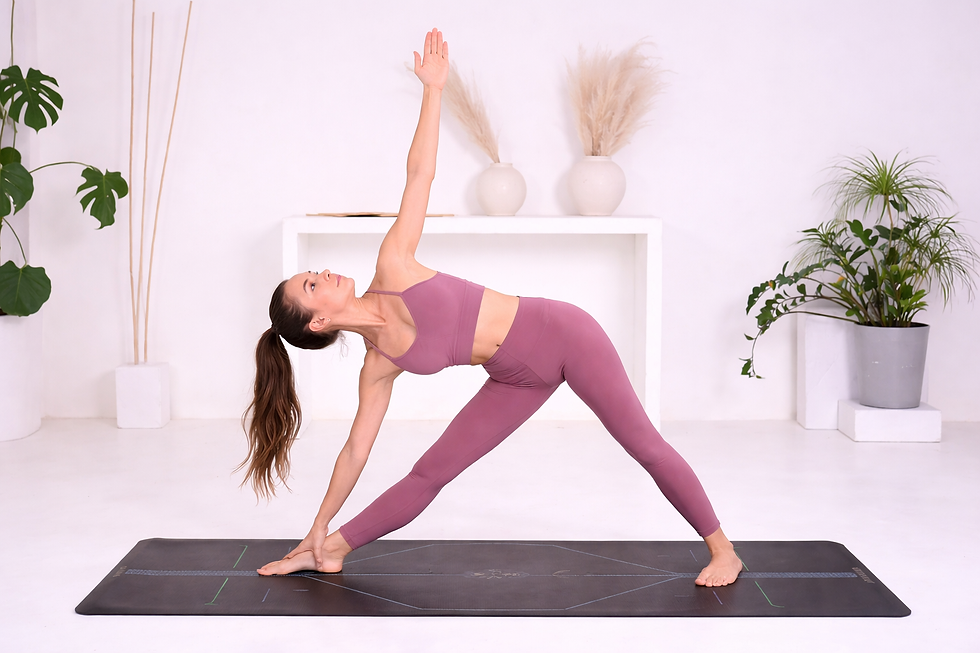
The Triangle Pose combines multiple movements:
• A straight extended leg
• Side bending
• Spinal rotation
While this pose can feel like a strong stretch, it may not be ideal for someone with active sciatica.
Extending the leg while rotating the spine can increase tension along the sciatic nerve, especially if the nerve is already irritated.
For many disc injuries, rotation combined with bending can be a sensitive trigger.
This doesn’t mean the Triangle Pose is “bad,” but it may be best avoided until symptoms improve.
Pose 6: Cobra Pose (One of the Most Powerful Sciatica Movements)

The Cobra Pose is one of the most effective movements for disc-related back pain and sciatica.
However, the way it is often taught can be problematic.
Many instructors recommend:
• Lifting the chest high
• Squeezing the glutes
• Holding the position for long periods
But holding the pose too long can sometimes irritate sensitive discs.
Instead, Cobra works best when performed as a repeated movement rather than a long hold.
Key Adjustment:
Instead of holding the position, move slowly in and out of extension.
This allows the spine to gradually adapt without placing prolonged stress on the tissues.
When performed correctly, Cobra can:
• Reduce disc pressure on the nerve
• Encourage symptom centralization
• Improve spinal extension
For many people with sciatica, this movement can be extremely effective.
The Truth About Yoga and Sciatica
Yoga itself is not good or bad for sciatica.
The truth is that no exercise is universally good or bad.
Every movement must match the right person at the right stage of recovery.
Some poses may relieve your pain instantly, while others may worsen symptoms.
That’s why randomly trying stretches without a plan often leads to frustration.
The Missing Piece in Most Sciatica Recovery Plans
Most people with sciatica try random stretches, yoga flows, or generic exercises.
But recovery usually happens faster when you follow a structured plan based on how your symptoms respond to movement.
This process helps identify:
• Which movements reduce nerve irritation
• Which exercises aggravate symptoms
• What progression your spine needs next
When the right movements are prescribed, many people experience rapid symptom improvement without injections or surgery.
What is the Next Step?
This can vary from person to person but in my experience with online clients around the world there is a similar pattern among many individuals with disc herniations or sciatica that is commonly missed. The majority of my clients in the RehabFix Online Low Back Program have had low back issues for years and have tried Chiro, PT, medication, injections, orthopedists - you name it! It seems like they all were missing some key components.....
✅ What they were missing is the Centralization Process which helps us immediately determine the right exercises for your situation!
✅ See on average a 37% reduction in symptoms in the very first session to avoid surgery!
✅ Get a free demo with us following the link below!
Thanks for reading! -Dr. Grant Elliott


Comments